

Banff in summer is one of those rare destinations that actually lives up to the postcard. Turquoise lakes, glacier-fed rivers, towering mountain peaks, wildlife sightings, self-guided scenic trails, and long golden evenings all come together in a way that feels almost unreal.
But here’s the reality: Summer in the Canadian Rockies is also the busiest time of year. That means the difference between a stressful trip and an unforgettable one usually comes down to planning.
The best mountain travel itinerary isn’t about trying to see everything. It’s about building a smart plan around timing, transportation, and the experiences that matter most to you. Whether you’re visiting for the first time or returning to explore more of the region, having a realistic approach makes the entire journey smoother and more rewarding.
One of the biggest mistakes travelers make is underestimating logistics. Parking at Moraine Lake is restricted year-round, Lake Louise lots fill before sunrise, shuttle reservations sell out weeks in advance, and traffic along major sightseeing routes can become overwhelming during peak season.
That’s where smart planning meets local expertise. Calgary2Banff positions its services around exactly that experience: local storytelling, door-to-door pickups from your Calgary accommodation, and stress-free access to the Rockies’ most iconic destinations through exclusive Parks Canada commercial permits. We handle the routing, parking, and scheduling so you can focus entirely on the views.
When to Visit Banff in Summer: Month-by-Month Breakdown
The core summer season runs from June through September, but each month offers a distinctly different experience. Understanding these differences helps you plan around your priorities—whether that’s avoiding crowds, catching seasonal color shifts, or experiencing the lakes at their most vibrant.
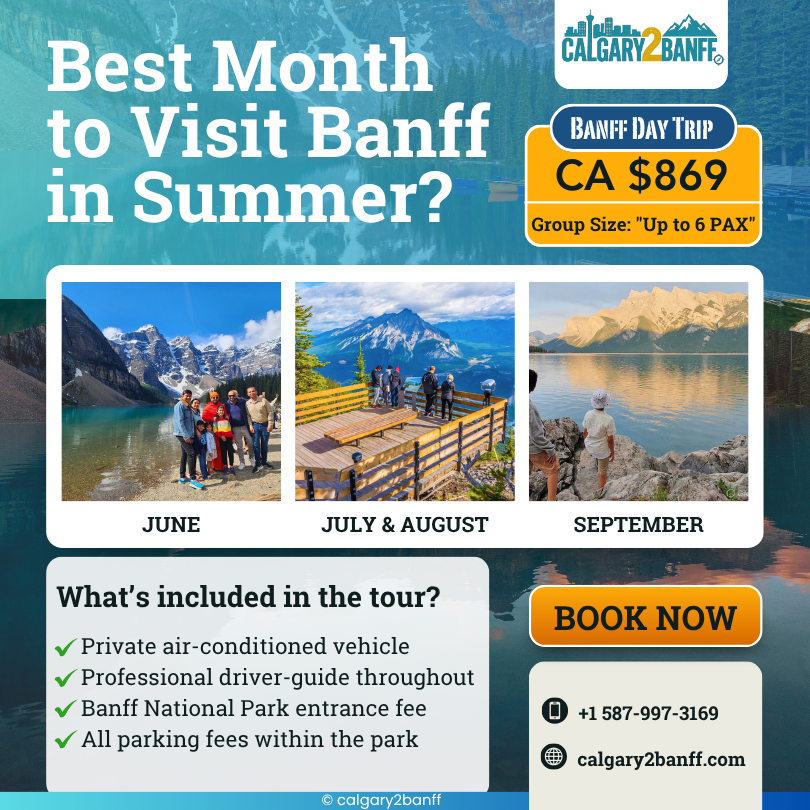
June: Waterfalls, Wildflowers, and Fewer Crowds
June is ideal for travelers who want beautiful scenery without the absolute peak-season congestion. Snow still caps many mountain peaks, waterfalls are at their most powerful from glacier melt, and the lakes begin turning their signature turquoise color as the month progresses.
What to expect:
- Average temperatures: 8–20°C (46–68°F)
- Some higher-elevation viewpoints may still have lingering snow
- Most major attractions are fully operational
- Significantly fewer visitors than July/August
- Longer daylight hours
Best for: Photography, scenic touring, wildlife spotting, and enjoying quieter viewpoints.
July & August: Peak Rockies Experience
July and August are Banff’s busiest months for a reason. The weather is reliably warm, daylight stretches late into the evening, main trail networks are accessible, and every iconic attraction is operating at full capacity.
This is the ideal window for:
- Lake photography and shoreline walks
- Gondola summit rides with clear views
- Icefields Parkway scenic drives
- Sunrise and sunset sightseeing
- Family vacations
However, these months also bring:
- Heavy parking congestion at popular pullouts
- Crowded viewpoints requiring patience
- Limited public shuttle availability
- High accommodation demand and pricing
Planning transport early becomes essential during this period. Calgary2Banff notes that Moraine Lake access has become especially competitive since private vehicles were restricted in 2023, making commercial permits the most reliable way to guarantee entry without shuttle lottery stress.
September: Crisp Air, Golden Light, and Hidden Gem Status
September is often considered one of Banff’s best-kept secrets. The crowds begin thinning after Labor Day, temperatures remain comfortable, and the first hints of fall color slowly start appearing in the higher elevations.
What to expect:
- Average temperatures: 5–18°C (41–64°F)
- Crisp, clear mountain air
- 30–40% fewer visitors than peak summer
- Exceptional golden-hour lighting for photography
- Some seasonal facilities begin mid-month wind-downs
This is an excellent month for scenic drives, early wildlife activity, photography with softer light, couples’ getaways, and relaxed sightseeing without rushing. If you prefer quieter travel and cooler mornings, September may be the ideal balance.
How to Plan Your Banff Summer Trip: The Smart Approach
Banff rewards travelers who plan early. Summer demand is extremely high, especially for accommodations, lake access, and transportation. Here’s your step-by-step planning framework.

Step 1: Book Transportation Before Anything Else
Many visitors plan accommodations first and transportation second. In Banff, it often works better the other way around.
Why?
- Moraine Lake requires shuttle or commercial access (private vehicles banned since 2023)
- Parking at Lake Louise fills before sunrise
- Summer traffic creates delays throughout the park, especially on weekends
- Shuttle reservations can disappear weeks ahead
Calgary2Banff’s guided transportation model is designed specifically to eliminate these friction points through hotel pickup from any Calgary location, commercial lake access via Parks Canada permit, pre-arranged touring with optimized timing, and local storytelling on crowd-avoidance strategies.
Step 2: Reserve Key Attractions Early
For summer 2026 travel, book these as soon as possible (ideally 3–6 months ahead):
- Banff accommodations (hotels fill fastest)
- Banff Gondola tickets (peak times sell out)
- Moraine Lake shuttle or guided visit (mandatory reservation)
- Lake Louise shoreline access and experiences
- Icefields Parkway scenic tours (full-day commitments)
- Restaurant reservations (popular spots book weeks ahead)
Peak-season travelers should ideally secure reservations several months ahead. The Canada Strong Pass initiative is expected to drive record visitor numbers, making early booking even more critical.
Step 3: Build Around Early Mornings
One of the most valuable Banff travel tips is simple: start early.
Early mornings offer:
- Easier vehicle positioning at popular stops
- Calmer lake surfaces for reflection photography
- Smaller visitor volumes (most arrive 10 AM–4 PM)
- Peak wildlife viewing windows
- Cooler, more comfortable walking conditions
Many iconic Rockies photographs are captured before 8 AM for exactly these reasons. If you’re not an early riser, consider booking a guided sunrise departure—you’ll experience the quiet magic without the pre-dawn alarm.
Step 4: Pack Strategically for Mountain Weather
Even in July, mountain weather can shift quickly from sunshine to rain within an hour. Layering is your best strategy.
- Banff Summer Packing Checklist:
- Lightweight base layers (temperatures swing 15–20°C daily)
- Waterproof/windproof jacket (afternoon storms are common)
- Comfortable walking shoes
- Reusable water bottle (stay hydrated at elevation)
- Sunscreen SPF 30+ (UV intensity is higher in alpine environments)
- Sunglasses
- Small daypack for personal items
- Camera + extra batteries/charger
- Hat and light gloves (useful at glacier elevations)
Seasonal Tips for a Better Banff Summer Trip
These insider strategies separate stressful trips from seamless ones.

1. Start Earlier Than You Think
Popular areas become crowded quickly. Arriving before 8 AM can dramatically improve the experience at key viewpoints and shoreline stops. If you want calm water reflections and quieter trails, be on-site at sunrise.
2. Layer Your Clothing
Mountain weather changes fast, even in summer. A warm, sunny morning can turn cool and rainy within hours—especially at higher elevations. Pack a moisture-wicking base, fleece mid-layer, and waterproof outer layer. Light gloves and a warm hat are recommended for glacier elevations and early-morning departures.
3. Prioritize Short Scenic Walks
You don’t need extended backcountry treks to enjoy Banff. Many travelers find the biggest payoff comes from lakeshore walks, short canyon trails, elevated viewpoints accessible during touring stops, and scenic picnic pullouts. These experiences deliver maximum scenery with minimal exertion—perfect for families, casual travelers, or anyone who prefers savoring views over conquering peaks.
4. Build Downtime Into Your Itinerary
Trying to do too much often reduces the enjoyment of the Rockies. Leave space for coffee breaks, scenic drives without rigid schedules, patient wildlife stops, and relaxed evenings. The Canadian Rockies reward slow travel. You’ll remember the moments of stillness as much as the checklist completions.
5. Plan Around Access Restrictions
Moraine Lake restrictions continue affecting summer travel logistics. Since 2023, private vehicles are banned year-round. Commercial operators with Parks Canada permits offer one of the easiest ways to guarantee access—no shuttle lotteries, no parking uncertainty, no early-morning navigation stress. (Note: Banff Gondola tickets, canoe rentals, Lake Minnewanka cruises, and Ice Explorer/Glacier Skywalk access are available as optional add-ons through local operators; not included in base tour pricing.)
Canada Strong Pass 2026: Free Banff Entry (June 19 – September 7)
Important update for summer 2026 travelers:
The Canada Strong Pass initiative provides FREE admission to Banff National Park from June 19 to September 7, 2026. This applies to Canadian residents and international tourists alike.
What’s included:
- Free park entry
- 25% discount on Parks Canada camping
- Free museum admission for children under 17
- 50% museum discount for ages 18–24
What’s NOT included:
- Transportation services and guided tour fees
- Parking fees (still apply in many areas)
- Attraction tickets (gondola, boat cruises, glacier experiences still require separate payment)
The catch: While park entry is free, transportation planning, Moraine Lake access, parking, and timing will matter more than ever. Tourism experts expect record-breaking visitor demand during this period.
Smart strategy: Use your savings on park fees toward guided experiences that guarantee access, handle all routing logistics, and eliminate parking stress.
Conclusion: Turn Your Banff Summer Plan Into a Stress-Free Experience
The ideal Canadian Rockies experience is not necessarily the busiest itinerary—it’s the one that feels smooth, balanced, and memorable from beginning to end. With summer demand increasing every year—especially during initiatives like the Canada Strong Pass season—transportation and access planning matter more than ever. The difference between a stressful scramble for parking and a serene sunrise at Moraine Lake often comes down to one decision: how you choose to explore the mountains.
Calgary2Banff positions its tours around solving exactly those challenges through local guides who know every viewpoint, wildlife corridor, and hidden gem; commercial permit access guaranteeing entry to restricted areas; door-to-door service from your Calgary hotel with no shuttle hubs or parking navigation; optimized timing for photography and crowd avoidance; and full fleet options from private SUVs to luxury coaches.
Whether you’re planning a Rockies summer escape from Calgary, a Moraine Lake and Lake Louise sunrise departure, an Icefields Parkway scenic drive, or a private, custom mountain travel itinerary, having transportation, timing, and logistics handled in advance can make the entire journey significantly more enjoyable.
Summer 2026 is shaping up to be Banff’s busiest season yet. Advance reservations secure your access, your vehicle, and your preferred departure time. Let Calgary2Banff handle the routing while you soak in the mountains.
Frequently Asked Questions: Planning Your Banff Summer Trip
Yes. Private vehicles have been banned from Moraine Lake year-round since 2023. Your options are the Parks Canada shuttle, commercial tour operators with Parks Canada permits, or commercial shuttle services. Guided tours offer one of the easiest access methods—no reservation lottery, hotel pickup included, and combined routing with Lake Louise in the same day.
Minimum 3 days, ideally 5–7 days for a comprehensive experience. Three days covers Lake Louise, Moraine Lake, Banff townsite, and one major scenic drive. Five days adds Icefields Parkway routing, Johnston Canyon, and relaxation time. Seven or more days allows for Yoho National Park, extended sightseeing, and multiple lake visits. First-time visitors should plan at least 5 days to avoid rushing.
Most tours typically include private transportation, professional driver-guide, door-to-door pickup from any Calgary location, Banff National Park entry fees, all parking fees within routing, and bottled water. Meals, gondola tickets, canoe rentals, attraction admissions, and gratuities are available as optional add-ons through local operators; not included in base tour pricing. Specific inclusions vary by departure and are clearly outlined at booking.
3–4 months ahead for peak season (July–August), 6+ months for sunrise/private tours. Summer 2026 is expected to be exceptionally busy due to the Canada Strong Pass initiative. Last-minute bookings are sometimes available but severely limit routing options and timing preferences.
Yes, but it requires planning. Options include guided tours, public transit, shuttle services, or private transfers. Guided sightseeing is the easiest car-free option—we handle all transportation, parking, and access logistics while you enjoy the scenery and local storytelling.
It depends on your priorities. June offers fewer crowds and powerful waterfalls. July brings peak wildflowers and warmest weather but highest visitor volume. August has the warmest lake temperatures and longest days but peak congestion. September offers 30–40% fewer visitors, crisp air, and early fall colors. Early June or mid-September provides the best balance of good weather and manageable crowds.